| Printing Method |
Best For |
Common Applications |
| Digital Printing |
Small orders and flexible designs |
Product launches, seasonal packaging |
| Flexographic Printing |
Large volume production |
Regular retail packaging, repeat orders |
| Offset Printing |
Detailed artwork and color accuracy |
Complex brand designs, premium retail packaging |
Custom printing is where many brands focus most of their design energy.
In some cases, this focus creates long-term problems.
A detailed design with multiple colors, intricate patterns, and special effects may look impressive during the design phase. But it can also increase production complexity and create consistency challenges for repeat orders.
The first order is rarely the biggest challenge.
Consistency across second, third, and ongoing reorders is where unplanned costs appear.
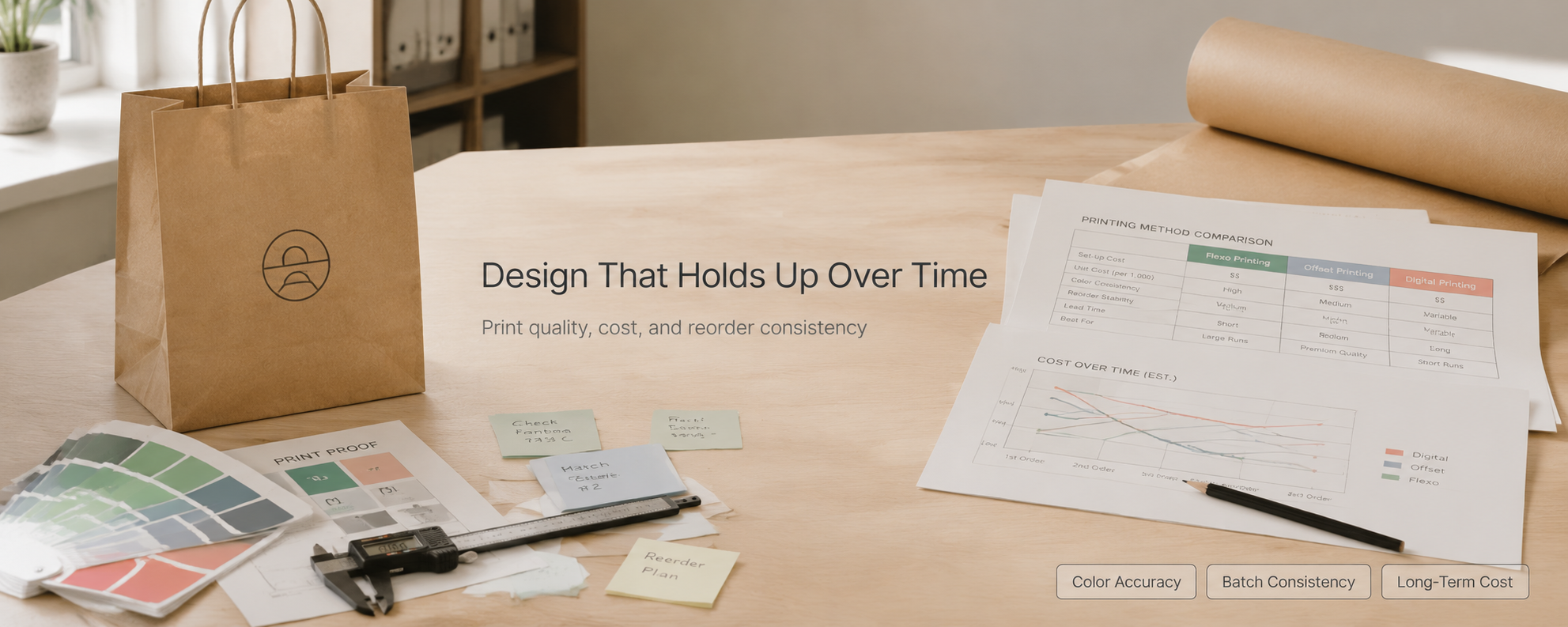
For runs under 1,000 units, digital printing eliminates plate fees; for runs over 5,000 units, flexography can reduce per-unit costs depending on project requirements. When selecting a printing method, teams should consider:
- Overall artwork complexity
- Typical order quantity per run
- Required color accuracy standards (many retail brands use Delta E measurements to maintain logo consistency across orders)
- Repeatability across production batches
- Long-term budget for ongoing reorders
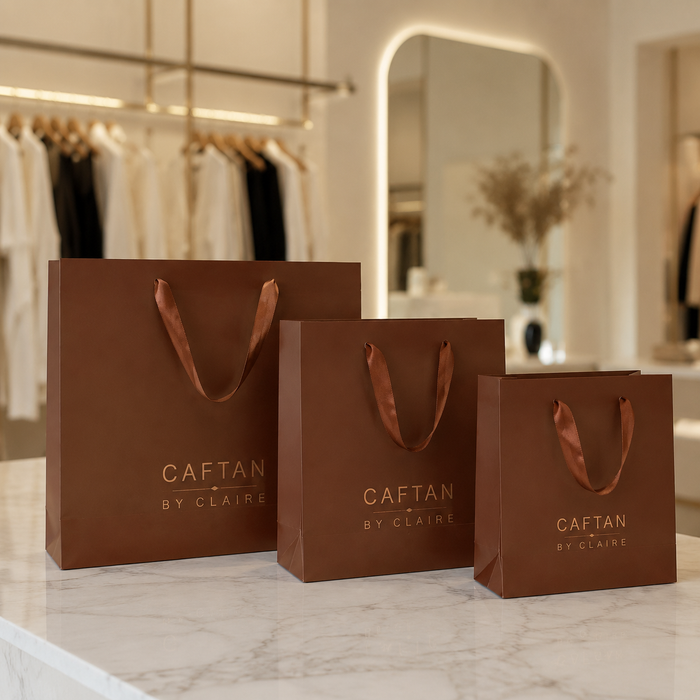
A simple, well-placed logo with clear brand identity often performs better than a crowded design that attempts to communicate every brand message at once.
Different printing options come with distinct cost structures and production requirements. Reviewing core paper bag printing methods and repeat-order cost differences before production helps teams select an option that fits both immediate launch needs and long-term reorder plans.
Experienced packaging buyers understand that the lowest upfront printing cost is not always the lowest total cost.
If inconsistent color requires reprints, or artwork adjustments cause production delays, any initial savings can disappear quickly.
Strong packaging design does not only look good on launch day. It must hold up to consistent reproduction across orders placed months apart.


.png)