Paper
Packaging
Manufacturer
In China

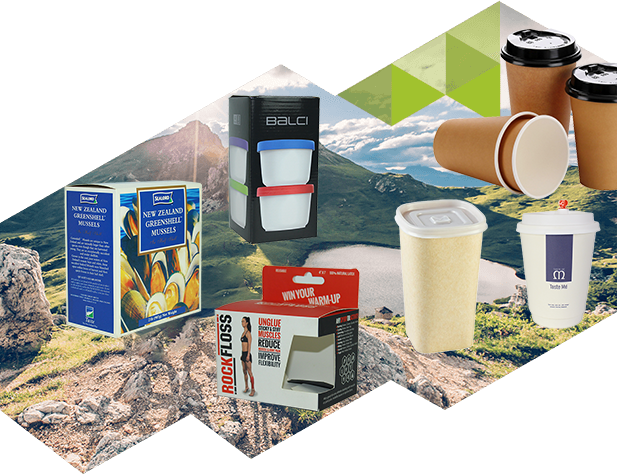
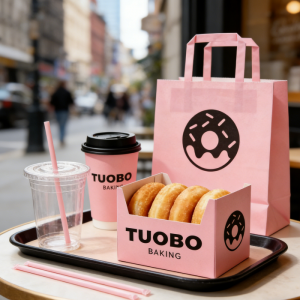
Tuobo packaging is committed to providing all disposable packaging for coffee shops, pizza shops, all restaurants and bake house, etc , including coffee paper cups, beverage cups, hamburger boxes, pizza boxes, paper bags, paper straws and other products.

All packaging products are based on the concept of green and environmental protection. Food grade materials are selected, which will not affect the flavor of food materials. It is waterproof and oil-proof, and it is more reassuring to put them in.

Sustainable Packaging Can Pay Dividends for Food Companies.

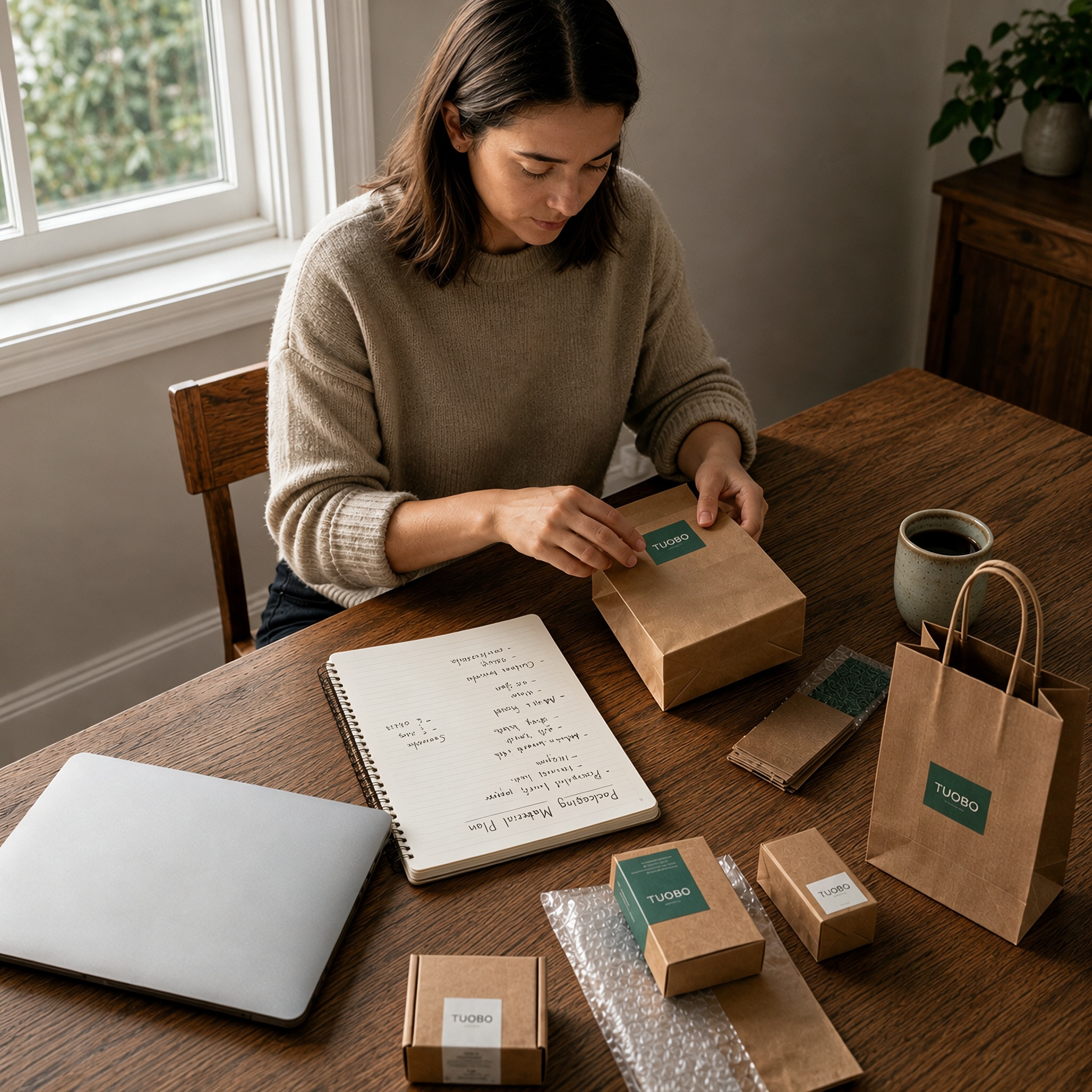
Female buyer reviewing custom kraft paper packaging samples including paper shopping bags and gift boxes at a wooden desk, with a packaging material plan notebook, laptop and coffee cup in natural window light.

Food companies are taking a harder look at packaging. Not just how it looks on the shelf, but what happens to it after the food is gone.

The usual requirements haven't changed. Packaging needs to protect the product, fit the production process, and survive shipping. But there is another question now: can the same job be done with less material, fewer unnecessary components, or a more practical end-of-life option?

That's where sustainable food packaging comes in.

There isn't one material that works for every food product. A bakery box has different needs from a coffee cup. A takeaway bag deals with different conditions from packaging for dry snacks.

The useful approach is to look at the food first, then compare what each packaging format can realistically offer.

1. What Does Sustainable Food Packaging Cover?

2. Why Sustainable Packaging Matters for Food Companies

2.1 Consumer Expectations Are Changing

Packaging is often one of the first physical parts of a food product that customers see and touch. A takeaway bag may stay on the table after the meal. A coffee cup can be carried around for hours. A bakery box might go home before the customer even opens it.

That gives packaging a role beyond protection.

CastlePierce cites the 2023 Buying Green Report, which found that 82% of surveyed consumers were willing to pay more for products in sustainable packaging. The same article reports that 44% were more likely to buy from a business with a clear commitment to sustainability.

Those figures don't mean a paper bag will decide every purchase. Price still matters. So do taste, convenience, product quality, and availability.

Packaging can, however, back up the message a food brand is already trying to communicate.

2.2 Packaging Rules Add Another Layer

Consumer demand isn't the only reason companies are changing packaging.

Rules around packaging waste, recycling, recycled content, and disposal are becoming more important across different markets. For businesses selling in several countries, there is another complication: the same package may face different disposal options from one market to another.

Local recycling systems don't always accept the same materials or finished formats.

So eco friendly food packaging needs to be considered as a complete system. The material matters, but collection and disposal matter too.

2.3 Don't Lose Sight of the Food

Here's the part that sometimes gets overlooked.

Food packaging still has to work.

Oil, moisture, heat, pressure, and storage time can all change what material makes sense. Filling equipment and warehouse handling matter too.

If a box collapses or a bag tears during delivery, the business may end up throwing away damaged food. That's hardly an improvement.

CastlePierce makes a similar point in its discussion of sustainable custom packaging, where environmental considerations sit alongside freshness, durability, and barrier requirements.

In practice, the food comes first.

perfume packaging bag

3. Choosing the Right Sustainable Food Packaging

3.1 Paper and Paperboard Are Still Practical

Paper and paperboard already cover a large part of food packaging. Think bakery boxes, takeaway bags, cups, cartons, trays, and retail packaging.

They are also relatively straightforward to customize around a product. Size, shape, print, and construction can change without forcing the whole product line into one standard format.

Tuobo's original article highlighted paperboard as one material food companies are turning to as they look for lower-impact packaging.

There's a catch, though.

Paper doesn't automatically mean recyclable.

A coating, plastic window, liner, adhesive, or other component can change what happens at the end of use. Looking only at the main material can give a misleading picture.

For recyclable food packaging, the finished structure matters more than the label on the material specification.


3.2 Compostable Doesn't Mean Compostable Everywhere

Compostable packaging has found a place in foodservice and retail, particularly where businesses want an alternative to conventional plastic.

Tuobo's original article mentioned fully compostable coffee pods as one example. Other formats include food containers, bags, films, and service packaging.

The limitation is worth stating clearly: some compostable materials need commercial composting facilities. If the local waste system doesn't have one, customers may have nowhere practical to send the package.

The same issue comes up with biodegradable plastics. Some require specific environmental conditions before they break down.

Before switching materials, check the actual disposal route in the markets where the package will be sold.


3.3 Plant and Fiber Materials Have Their Place

Paper isn't the only route.

CastlePierce discusses materials such as rice paper, seaweed, jute, cotton, bamboo, and hemp. It also points to reusable formats such as glass jars, metal tins, and bulk containers.

Some of these options make sense for particular products. Others introduce their own limitations.

A fiber material suited to dry goods may struggle with moisture. Fresh produce has different requirements from hot, greasy food.

There's no prize for choosing the most unusual material. If a familiar option works with less complexity, that can be the more practical choice.

3.4 Right-Sizing Can Make a Bigger Difference Than Expected

Changing the material isn't always necessary.

Sometimes the package is simply too big.

A box with a lot of empty space uses more board and takes up more room in transit. An oversized bag does the same with paper. Extra layers can add cost without doing much for the product.

Right-sizing addresses that problem directly.

CastlePierce includes minimalist packaging redesign and right-sizing among the options businesses can consider.

Start with the product dimensions. Look at the clearance actually needed, then check stacking and handling.

A closer fit can reduce material use and shipping volume at the same time. It shouldn't be taken too far, though. A package that's difficult to fill or too weak for normal handling creates a different problem.

Sustainable packaging can start with a simple custom paper bag or a recycled paper box. For food businesses, recyclable food packaging works well for many dry and takeaway products. Compostable food containers offer another option for certain applications. Some brands also choose plastic-free food packaging to cut down on unnecessary plastic parts. The material still needs to match the food, storage conditions, and serving method.

4. How Sustainable Packaging Can Affect Business Costs

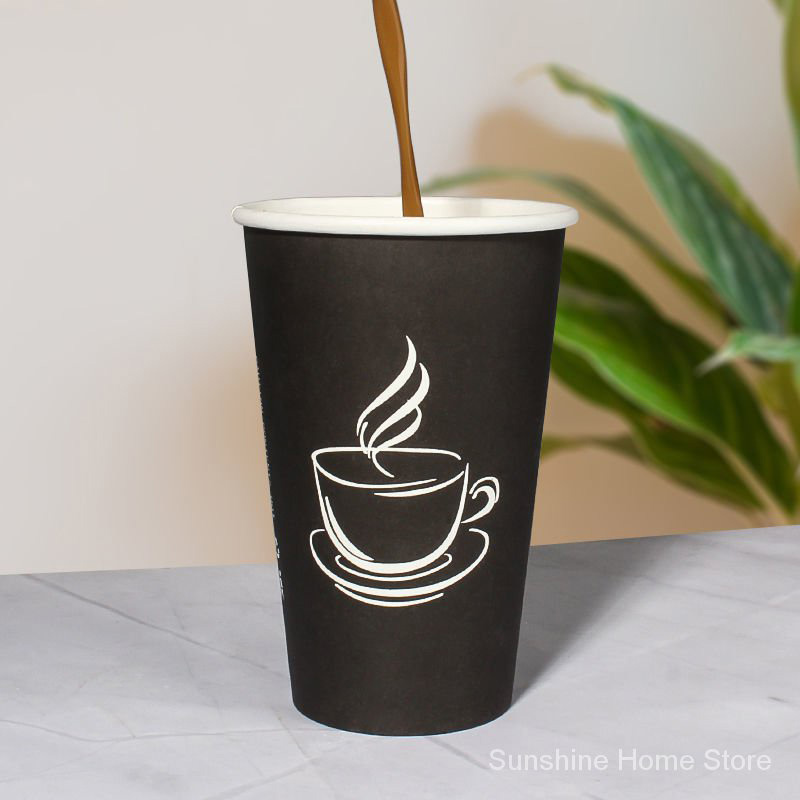
Kraft Paper Coffee Cups with Lids for Cafes
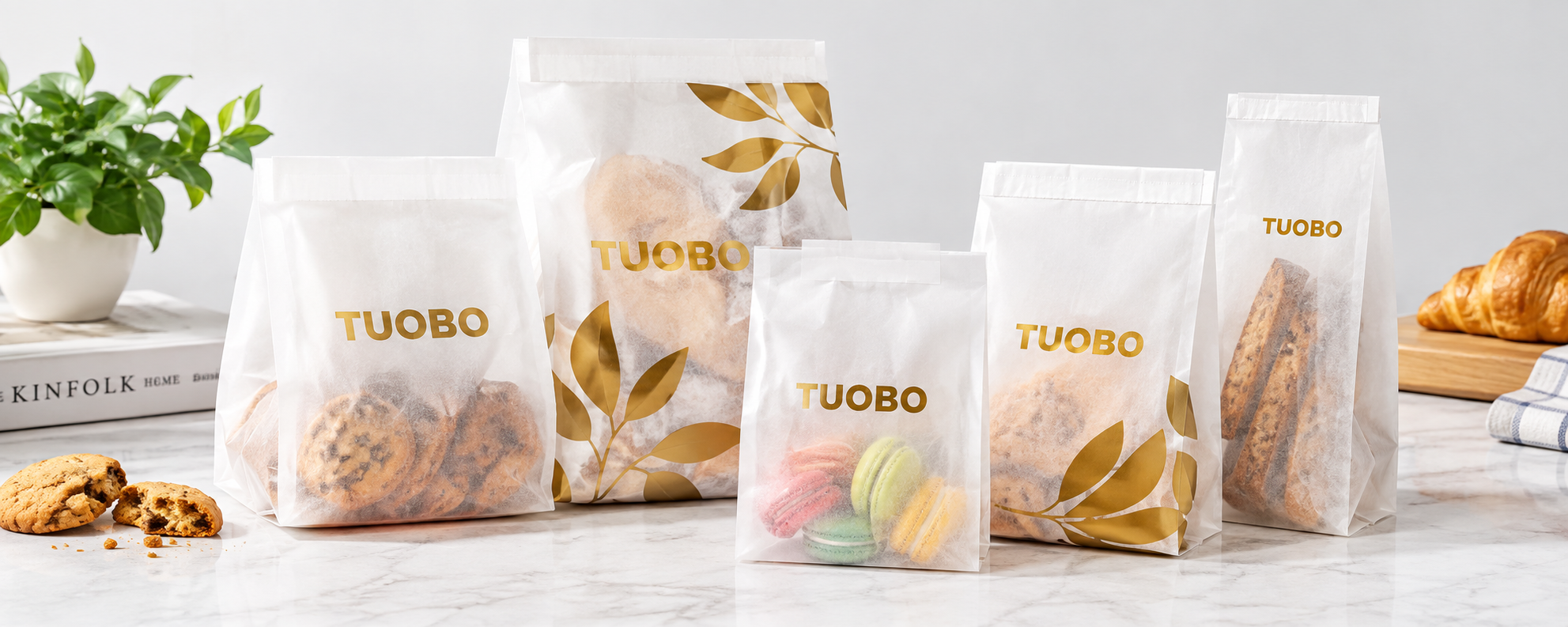
glassine bags for seeds
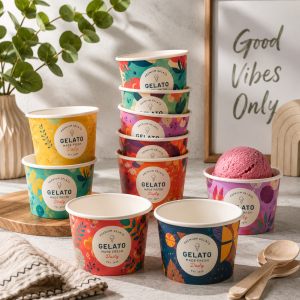
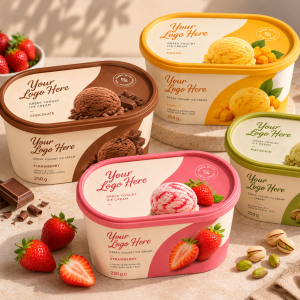
wholesale ice cream cups

A new package may cost more per piece. Tooling, testing, new artwork, or minimum orders can add to the upfront cost too.

But the unit price isn't the whole calculation. A smaller carton can reduce shipping volume, while a lighter format may use less material and take up less warehouse space. The actual numbers depend on the product and supply chain, so current supplier quotes are more useful than broad claims about sustainable packaging being cheaper.

Packaging also affects product loss. A crushed carton, torn bag, or moisture-damaged food can quickly outweigh a small saving on packaging. Before changing a format, test it under real handling and transport conditions.

Packaging can support the brand, but it shouldn't carry the whole message. If a package is recyclable, compostable, or made with recycled content, give buyers the specific information they need. "Green" on its own doesn't say much.

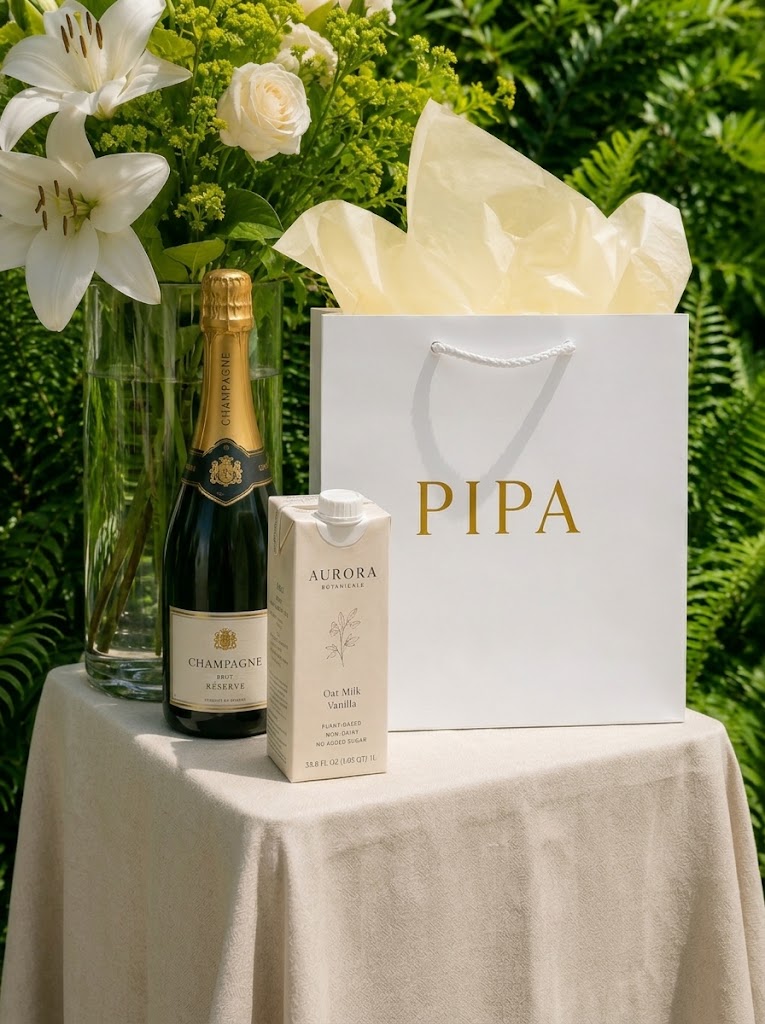
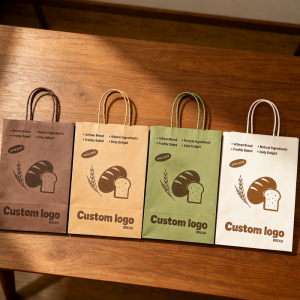
white paper shopping bags with handles wholesale

5. What Food Companies Should Check Before Switching

5.1 Start With the Product

What is actually going inside the package?

Oil, moisture, heat, freezing, shelf life, delivery distance, and retail storage can all change the requirements. A dry pastry doesn't need the same protection as a greasy takeaway meal.

For food packaging materials, the application should drive the choice rather than a generic sustainability list.


5.2 Look at Every Part of the Finished Package

The main sheet of paper is only part of the picture.

Check the coating, liner, closure, labels, windows, adhesives, or other added components.

These small details can affect recycling, compostability, food contact performance, and cost.

Printing and finishing deserve the same practical approach. If a simple structure works, there's little reason to add extra components just for appearance.


5.3 Check the Local Disposal System

Recycling or composting only works when the local system can actually process the finished package.

Before changing materials, check the markets where the product will be sold.

Can customers put it in household recycling? Does it require a commercial facility? Does the collection system accept the package after food contact?

These aren't exciting questions. They are useful ones.

A package can have strong environmental credentials on paper and still have limited disposal options in a particular market.


5.4 Look Beyond the Package

The supply chain can change the calculation.

Shipping carton capacity, warehouse space, stacking, and transport volume can all affect the total cost.

Those details can affect the total cost more than a small difference in material price.

For businesses comparing sustainable packaging solutions, the full operating picture matters more than the cost of one empty package.

6. Make the Packaging Decision Around the Whole System

For food companies, sustainable packaging is ultimately a practical purchasing decision.

Start with packaging performance. Then look at material use, local end-of-life options, and the costs across production, storage, shipping, and product loss.

The right format could be a paperboard box, compostable package, reusable container, or simply a smaller version of what's already being used. It depends on the product and the market.

Custom packaging can also help when standard sizes leave too much empty space or require unnecessary material. A closer fit often makes more sense than adding another layer or switching materials without checking the underlying design.

For sustainable packaging for food businesses, the useful benchmark is straightforward: enough protection for the product, no unnecessary material, a realistic disposal route, and costs that work across the supply chain.

TUOBO FAQ

Q1: What types of sustainable packaging solutions do you supply?
A1: We offer a wide range, including recyclable paper cups, fiber food containers, dessert boxes, ice cream cups, paper trays, pizza boxes, courier bags, and display boxes. Each option focuses on practical performance and lower-impact packaging for different food and retail applications.

Q2: Can I order small quantities to test your eco-friendly packaging?
A2: Yes. TUOBO supports flexible order quantities, so buyers can test packaging before moving to a larger production run. This works well for new stores, product launches, and pilot orders.

Q3: Can you add custom printing to sustainable food packaging?
A3: Absolutely. We can print logos, artwork, product information, and promotional messages on most packaging formats. Custom printed sustainable packaging gives brands more space to present their identity without changing the overall packaging structure.

Q4: How do customers respond to environmentally responsible packaging?
A4: Many consumers show interest in packaging with clear environmental attributes. Plastic-free packaging solutions can communicate a simpler material choice and give brands another way to present their sustainability efforts.

Q5: Can sustainable packaging handle hot, cold, or wet food?
A5: Yes, selected packaging formats can handle different food temperatures and moisture levels. Food-safe sustainable containers can work for hot meals, chilled desserts, and other applications when the material and barrier specification match the product requirements. Always check the specifications for temperature and moisture limits.

We always adhere to customer demand as the guide, providing you with high-quality products and thoughtful service. Our team is composed of experienced professionals who can provide you with customized solutions and design suggestions. From design to production, we will work closely with you to ensure that your customized hollow paper cups perfectly meet your expectations and exceed them.

Write your message here and send it to us

Ready to Start Your Paper Cups Project?

Write your message here and send it to us
750工厂

Tuobo Packaging-Your One-Stop Solution for Custom Paper Packaging

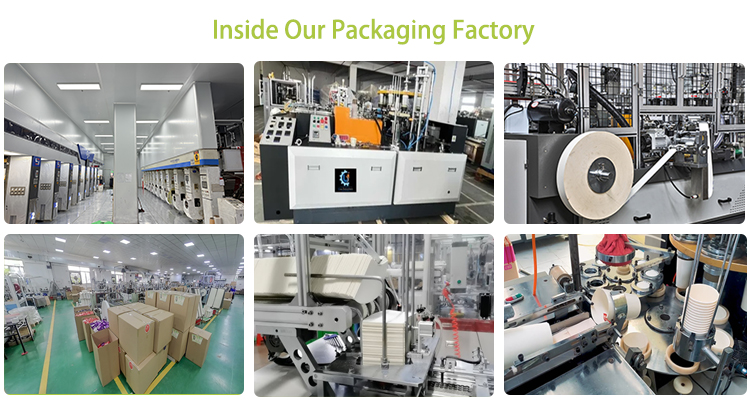
Founded in 2015, Tuobo Packaging has quickly risen to become one of the leading paper packaging manufacturers, factories, and suppliers in China. With a strong focus on OEM, ODM, and SKD orders, we have built a reputation for excellence in the production and research development of various paper packaging types.


TUOBO

ABOUT US

16509491943024911

2015 founded in

16509492558325856

 10 years experience

16509492681419170

3000 workshop of

tuobo product

Need packaging that speaks for your brand? We’ve got you covered. From Custom Paper Bags to Custom Paper Cups, Custom Paper Boxes, Biodegradable Packaging, and Sugarcane Bagasse Packaging — we do it all.

Whether it’s fried chicken & burger, coffee & beverages, light meals, bakery & pastry (cake boxes, salad bowls, pizza boxes, bread bags), ice cream & desserts, or Mexican food, we create packaging that sells your product before it’s even opened.

Shipping? Done. Display boxes? Done. Courier bags, courier boxes, bubble wraps, and eye-catching display boxes for snacks, health foods, and personal care — all ready to make your brand impossible to ignore.

One-stop. One call. One unforgettable packaging experience.

What we can offer you…

Best Quality

We have rich experience in the manufacture, design and application of coffee paper cups, and served more than 210 customers from worldwide.

Competitive Price

we have an absolute advantage in the cost of raw materials. Under the same quality, our price is generally 10%-30% lower than the market.

After-sale

We provide 3-5 years guarantees policy. And all cost by us will be on our account.

Shipping

We have best shipping forwarder, available to do Shipping by Air express, sea, and even door to door service.

Your Reliable Partner For Custom PaperPackaging

Tuobo Packaging is such a trusted company that assures your business success in a short time by providing its customers with the most reliable Custom Paper Packing.We are here to help product retailers in designing their own Custom Paper Packing at very affordable rates. There would be no limited sizes or shapes, neither design choices. You can choose amongst number of choices offered by us. Even you can ask our professional designers to follow the design idea you have in your mind, we’ll come up with the best. Contact us now and make your products familiar to its users.


Post time: Aug-03-2022