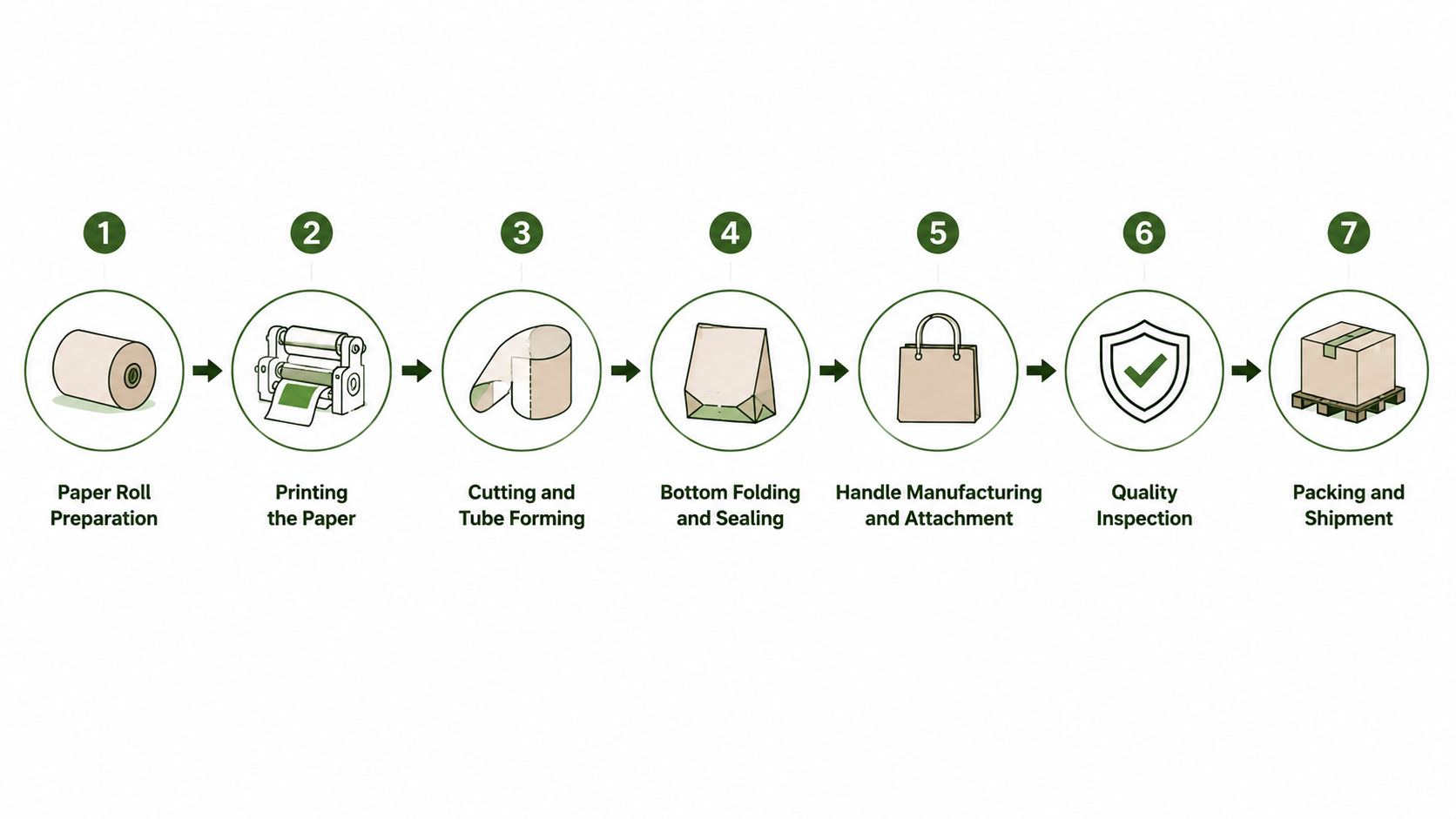
Understanding how paper bags are made requires following each stage of production, from raw paper rolls to the finished product.
2.1 Paper Roll Preparation
Most paper bag manufacturers begin with large rolls of kraft or specialty paper sourced from paper mills. These rolls are produced through wood pulp processing, papermaking, drying, and rewinding. The quality of the paper roll—its thickness, uniformity, and fiber composition—directly affects the strength and appearance of the final bag. B2B buyers often inspect supplier specifications for GSM, burst strength, and tensile strength to ensure suitability for their intended applications.
2.2 Printing the Paper
Printing typically occurs before the bag is folded and glued. Flexographic printing is widely used for high-volume production due to its speed and cost efficiency, while offset printing achieves high-resolution, multi-color designs. Digital printing allows for on-demand customization, variable data printing, and rapid response to promotional campaigns. Logos, brand colors, and design patterns are carefully aligned with the production line to ensure consistency and professional presentation.
2.3 Cutting and Tube Forming
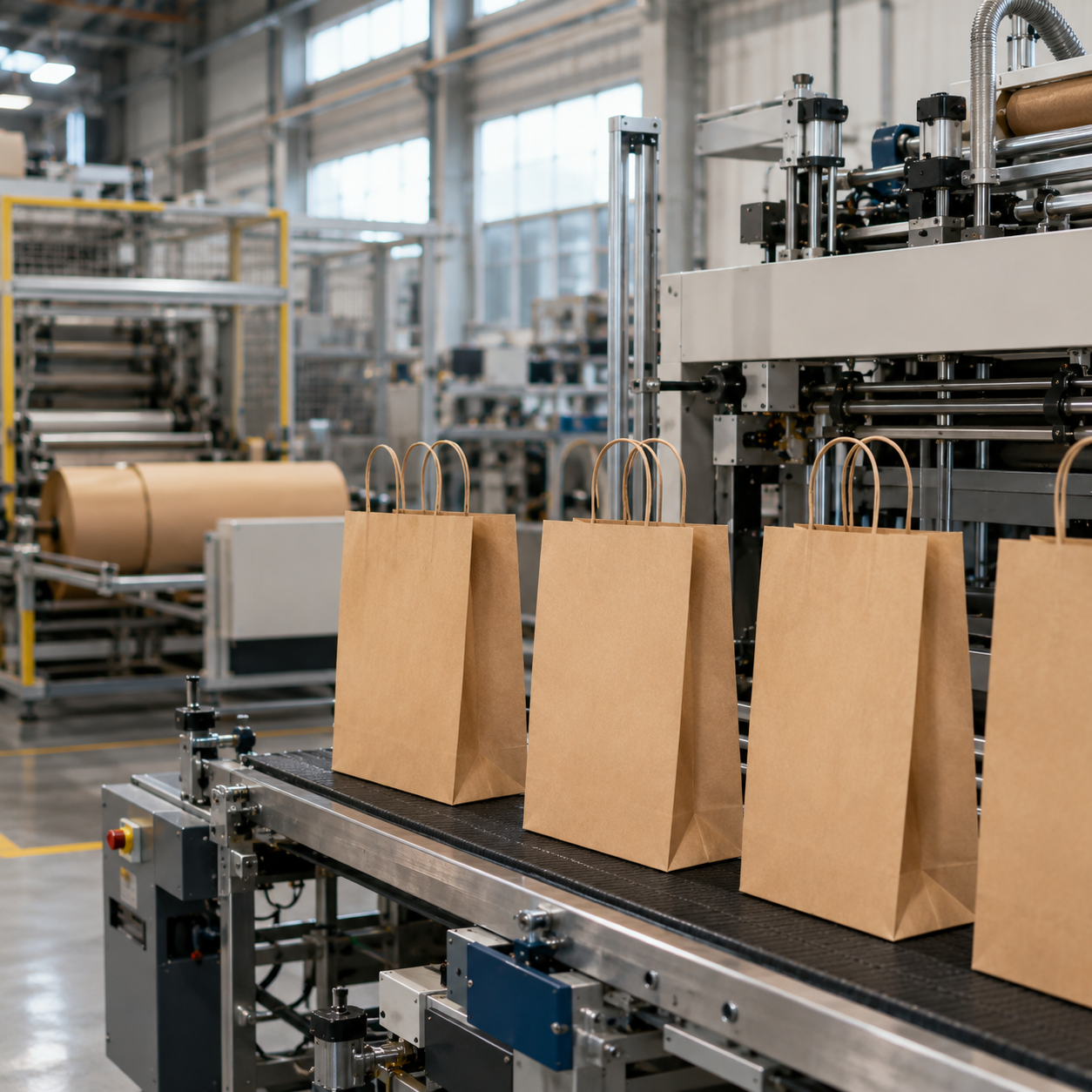
Once printed, the paper enters automatic bag-making machines where it is fed, cut, and shaped into a tube. Side gluing secures the tube edges, transforming the flat paper into a cylindrical or rectangular structure. This stage establishes the basic dimensions of the bag and lays the foundation for bottom folding and handle attachment. The precision of cutting and gluing machines ensures uniformity across large production runs, which is critical for brand consistency and packaging performance.
2.4 Bottom Folding and Sealing
The bag's bottom is folded and glued to create a load-bearing structure. Variations in bottom construction—such as square bottoms, V-bottoms, or block bottoms—affect both strength and stability. Automated machines fold the paper precisely, apply adhesive, and press the bottom securely, producing a bag capable of supporting the intended weight. Proper bottom sealing is crucial; errors here can lead to premature failure, particularly in food or retail applications.
2.5 Handle Manufacturing and Attachment
Handles are manufactured and attached according to the bag’s design requirements. Twisted paper handles, flat paper handles, cotton rope, and ribbon handles each require specific machinery for cutting, twisting, and gluing. Attachment methods ensure ergonomic handling while reinforcing structural integrity. This stage often involves both automated and semi-automated processes to maintain quality and accommodate different order volumes and customization needs.
2.6 Quality Inspection
Quality control is integral to the manufacturing process. Each batch undergoes dimensional checks, adhesive testing, load and drop testing, and visual inspection of prints and finishes. Many manufacturers adhere to AQL (Acceptable Quality Level) standards to ensure consistent performance. For B2B buyers, reviewing supplier quality control procedures is as important as evaluating paper or machine specifications.
2.7 Packing and Shipment
After inspection, bags are typically stacked, flattened, and packed into cartons for shipment. Standard practices include flat packing, carton packing, palletizing, and container loading. Efficient packing not only protects the bags during transport but also optimizes logistics and storage efficiency for downstream distributors or retailers.