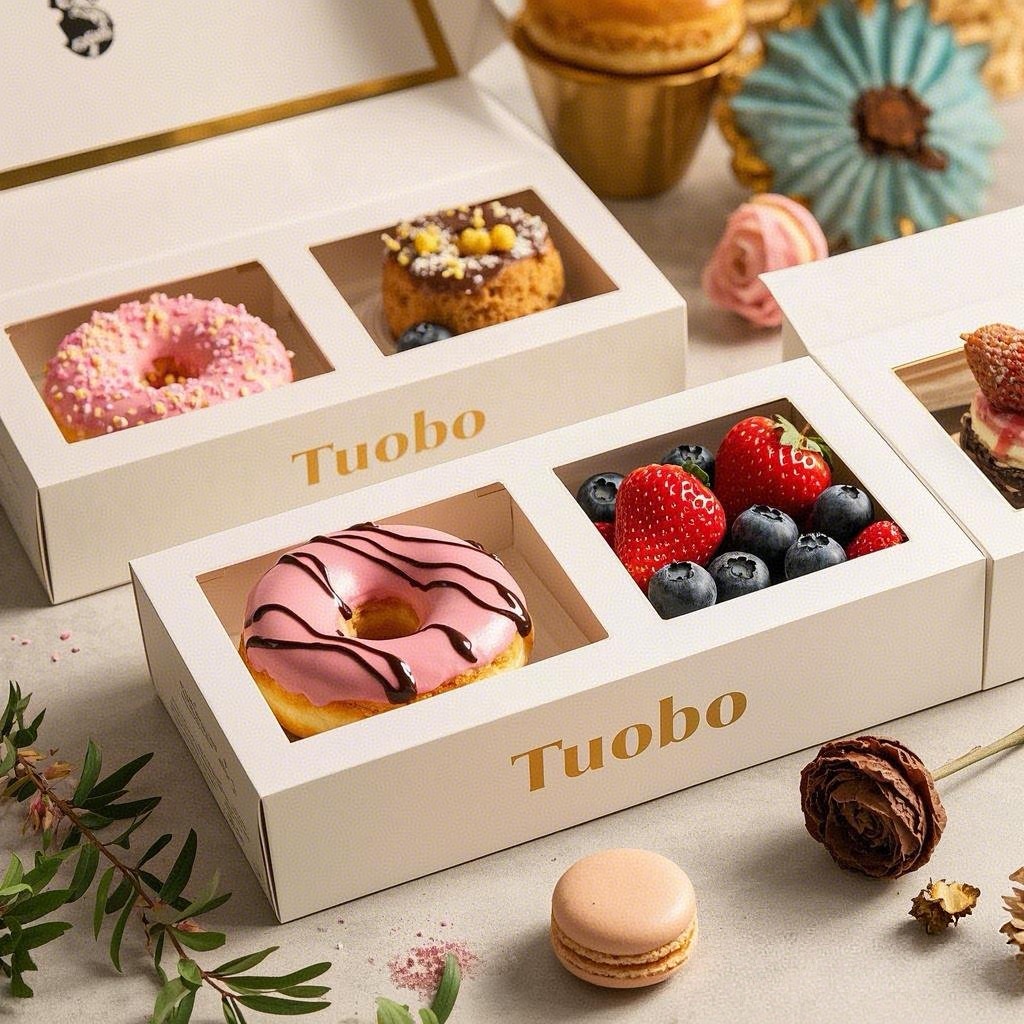
Paper-based packaging
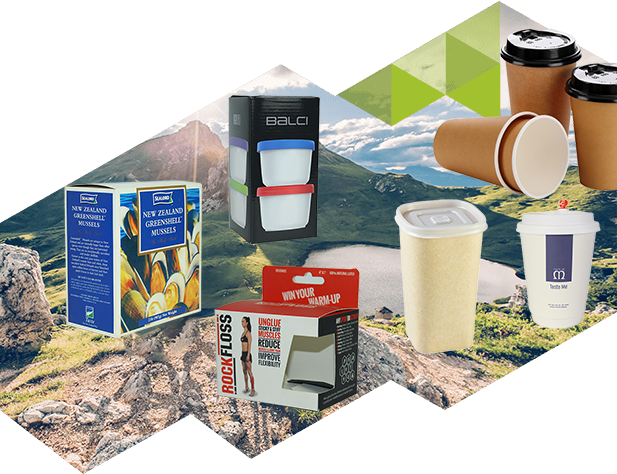
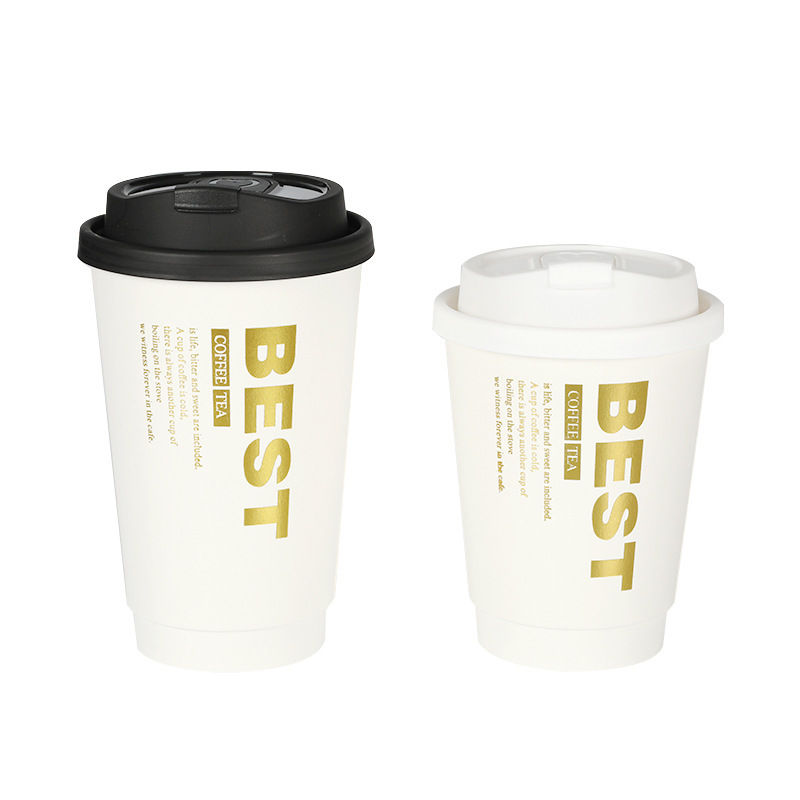
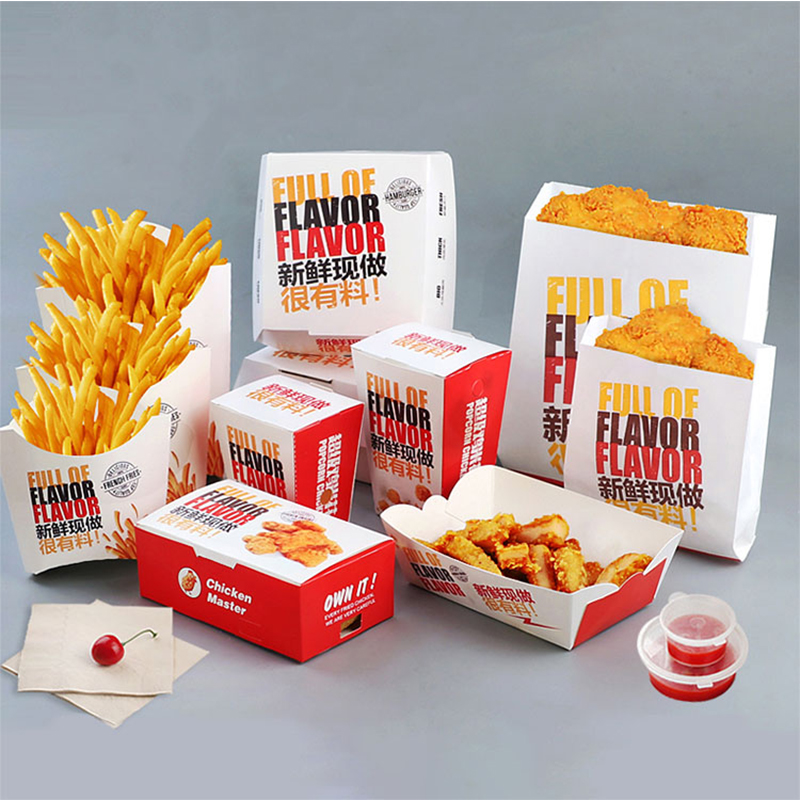
Paper remains one of the most versatile solutions for burgers, fries, sandwiches and light meals. However, paper packaging is not just “paper”.
What really matters is grease resistance, compression strength and how well the surface supports printing and branding. New generations of biodegradable packaging now allow brands to reduce plastic layers while maintaining functional protection.
But here is the question many buyers forget to ask:
Can this structure survive long-distance delivery and stacking?
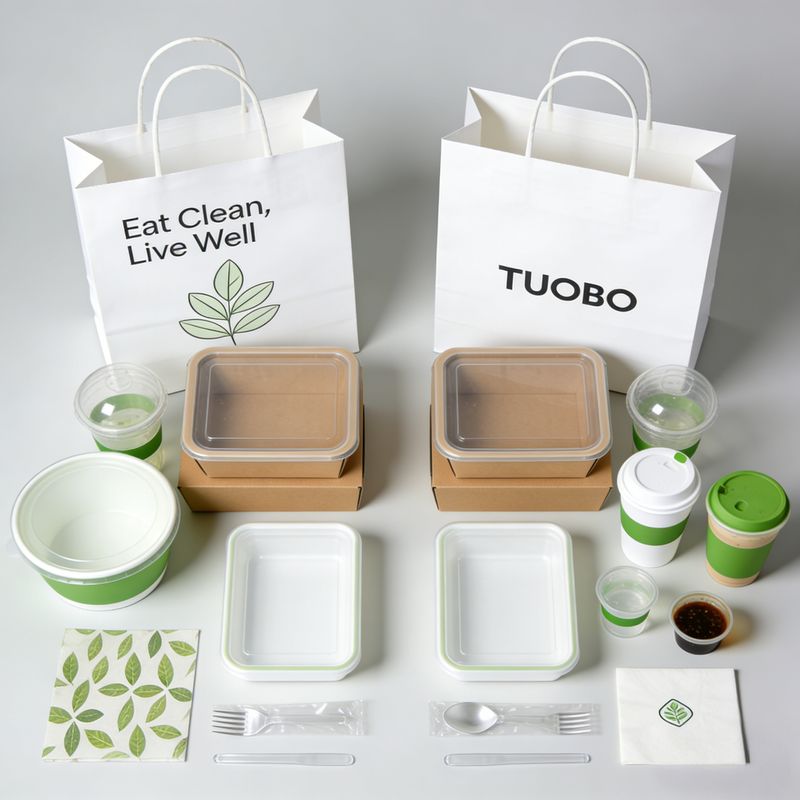
At Tuobo Packaging, we often adjust board thickness, folding angles and load-bearing points so your packaging performs consistently — not only during product photography, but during real service hours.
Molded pulp and sugarcane bagasse packaging
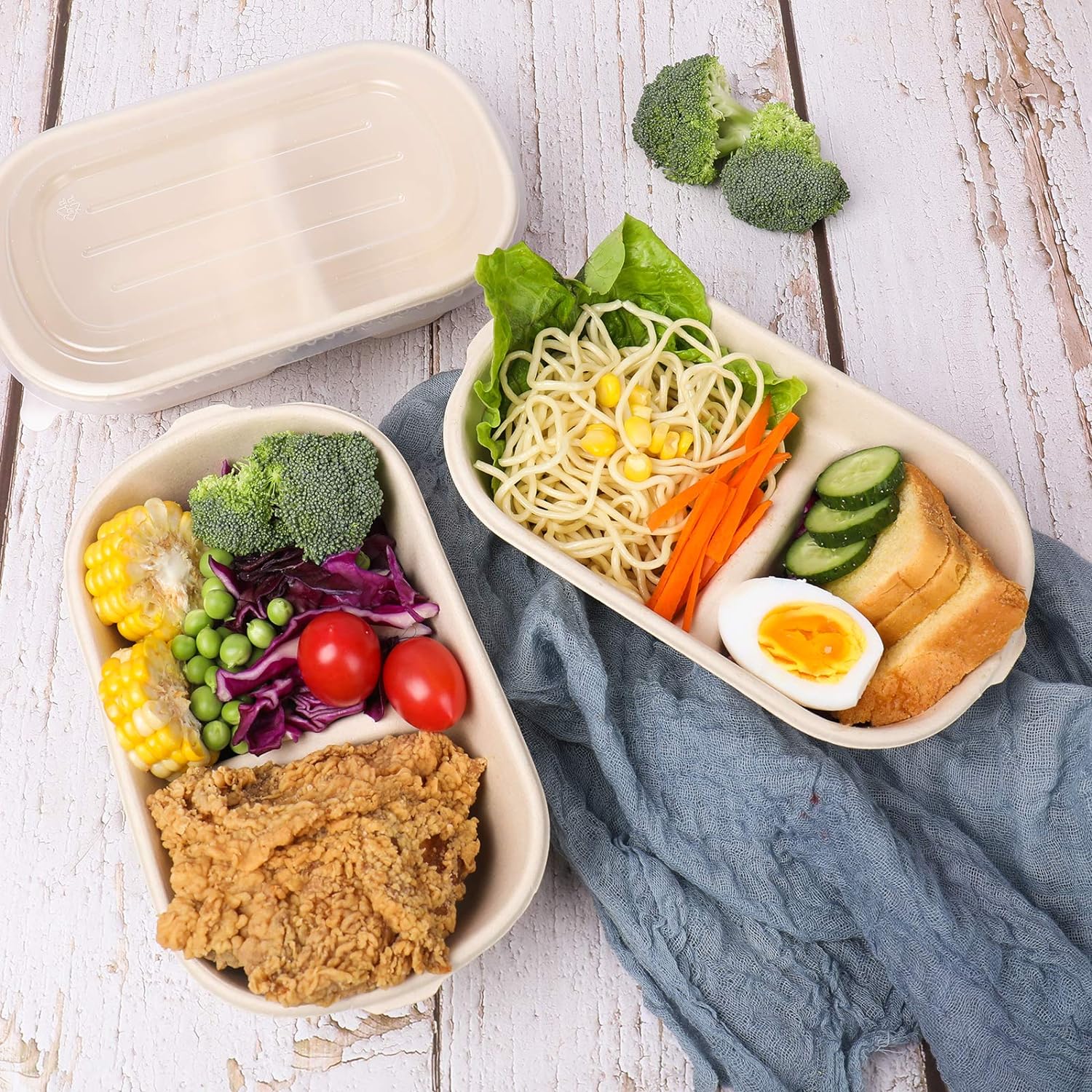
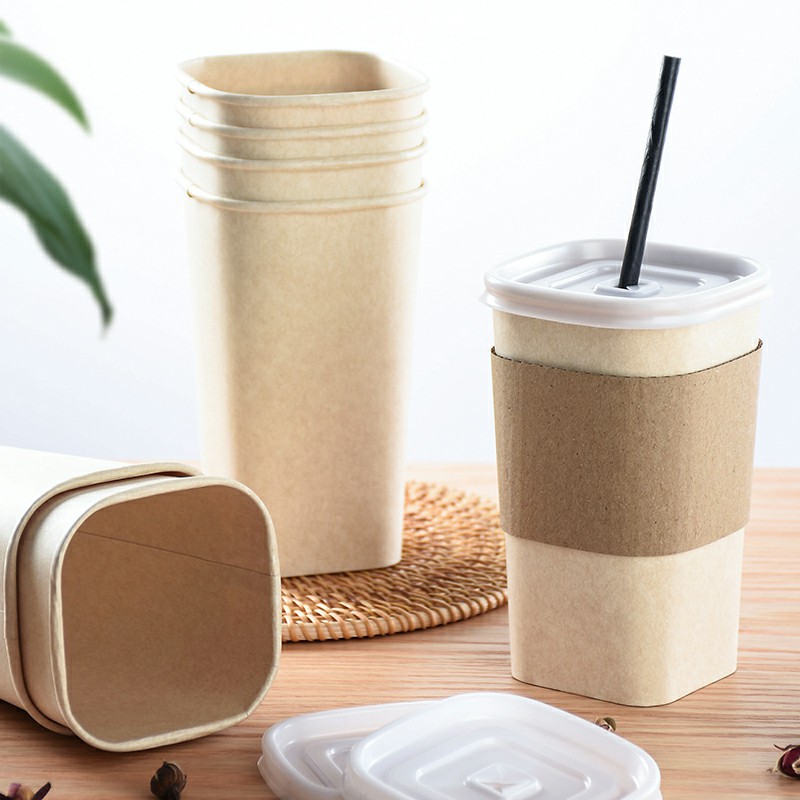
For hot meals, combo sets and dine-in plus takeaway scenarios, molded pulp and bagasse have become strong alternatives to traditional plastic and foam.
Solutions such as sugarcane bagasse packaging offer good heat tolerance and a natural appearance that communicates sustainability instantly.
However, bagasse is not magic. Moisture absorption, deformation under load and lid fitting accuracy must be carefully controlled. In our experience, structure density and mold quality make a larger difference than most buyers expect.
That is why we usually recommend pilot batches before rolling out bagasse packaging across multiple stores.
Recyclable plastics and plastic-free water-based coating solutions
Sustainability does not always mean eliminating plastic completely.
In some fast food applications, recyclable mono-material containers still deliver the lowest total waste when you consider product protection, transport efficiency and damage reduction.
For fiber-based solutions without plastic lamination, plastic free water based coating food cardboard product series provide an excellent balance between grease resistance and recyclability.
At Tuobo, we help brands compare environmental impact across the full life cycle — not just at the material label level.