Which Clothing Items Need Custom Apparel Boxes?
Custom apparel packaging boxes suit a wide range of clothing products. Folded shirts and T-shirts fit conventional rectangular boxes, while hoodies and sweatshirts need more room. Dresses and gowns require careful folding to keep the contents presentable. Sweaters, cardigans, activewear, sportswear, and children's clothing bring their own sizing needs.
Fabric sold by the piece presents a different challenge. The material should remain neatly folded, but customers still need to remove it without disturbing the rest of the contents.
The sales channel matters, too. A boutique selling formal shirts may favour a box that reveals the garment as soon as the lid comes off. An online clothing store needs packaging that can travel through parcel networks. Both can use custom apparel packaging, but the construction may differ.
7 Custom Apparel Box Styles Worth Considering
The opening mechanism is often the clearest way to compare box styles. Some have removable lids, others use sliding trays or hinged covers, and window boxes show part of the product before opening.
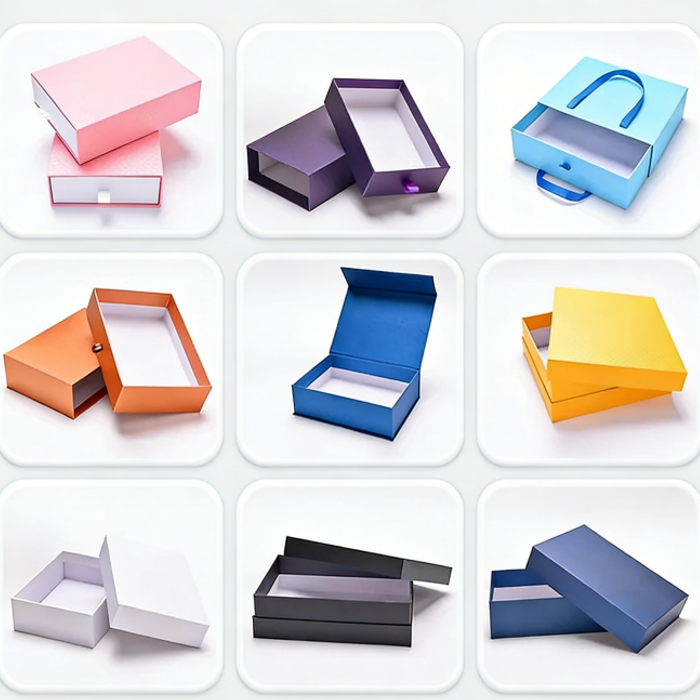
A lid-and-tray box has two separate components: a removable lid and a base that holds the garment. Lifting the lid exposes the entire tray, creating an unobstructed view of the contents.
The lid and base can carry contrasting colours, printed patterns, or logo details. This structure suits dress shirts, formalwear, and premium clothing gifts where the open-box presentation matters.
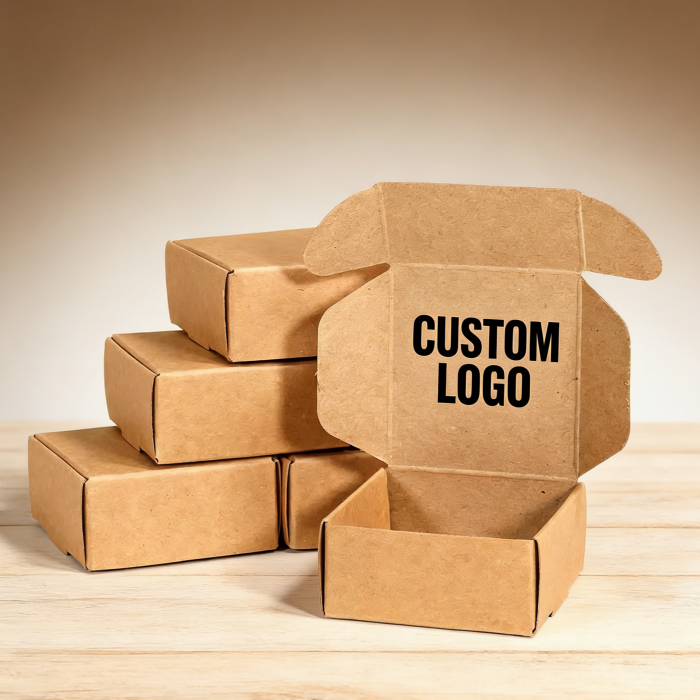
A roll-end tuck-front mailer folds into one integrated structure. Its side panels roll inward, while the front flap tucks closed to secure the contents.
Commonly used for e-commerce apparel orders, this format combines delivery packaging with branded presentation. Exterior and interior printing can carry the design across both surfaces.
3. Drawer-Style Boxes
A drawer box combines an outer sleeve with a sliding inner tray. Customers pull the tray out to reach the garment instead of lifting a lid or unfolding a flap.
The sleeve and tray provide separate areas for colours, graphics, and finishes. This arrangement suits premium shirts, clothing gift sets, and selected fashion accessories. Its defining feature is the sliding mechanism.
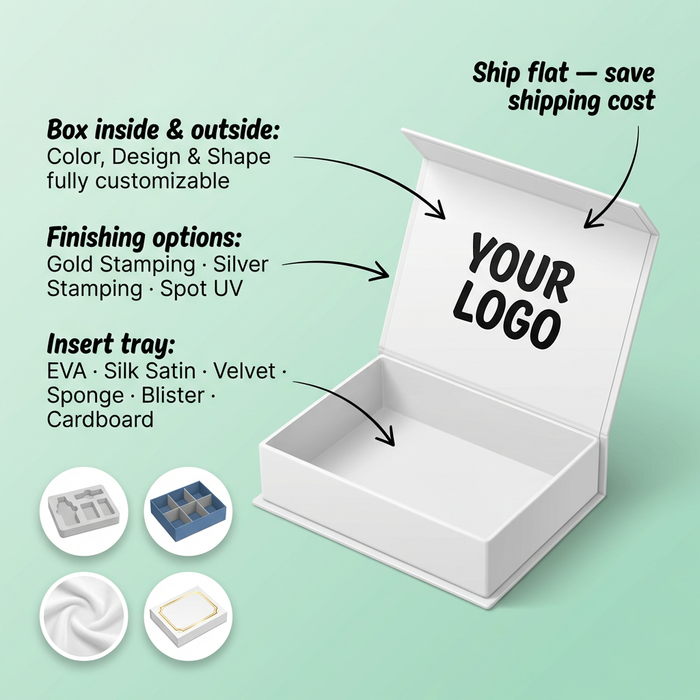
A book-style magnetic box has a hinged cover that opens from one side. Magnets hold the cover closed, and the lid stays attached to the base during opening and closing.
The broad front panel offers a prominent surface for logo printing. Additional artwork can appear inside the cover, extending the design across the opening. This format suits luxury apparel packaging that calls for a wide presentation surface and magnetic closure.
5. Die-Cut Window Boxes
A die-cut window lets customers see part of the garment before opening the package. The opening may remain uncovered or use transparent film.
Its shape and position determine which part of the folded product is visible. A carefully placed window can make the garment part of the packaging design, particularly in retail displays.
6. Tube Packaging
Tube packaging uses a cylindrical body with an opening at one end or a removable end cap. Customers access the garment through the end rather than lifting a conventional rectangular lid.
The round interior suits rolled garments, compact T-shirts, and textile products that fit a cylindrical shape. The product's rolled diameter and length determine the available space; bulky or flat-folded garments need a different arrangement.
7. Apparel Pillow Boxes
Pillow boxes have a curved body and two rounded end flaps that fold inward. Customers unfold one end to access the contents, without removing a separate lid or pulling out a tray.
Their compact shape suits socks, ties, lightweight clothing accessories, and small apparel gifts. The curved sides create a softer silhouette than standard rectangular packaging.
Once the box is ready, you can place it in one of TUOBO’s custom euro tote bags wholesale to make it easy for customers to carry home. Match the bag’s print and colours to the box for a consistent look across your retail packaging, whether you’re packing everyday clothing purchases or gift-ready pieces.
Choosing the Right Material for Custom Luxury Apparel Boxes
Material affects a box's rigidity, appearance, and performance during handling. Custom clothing boxes commonly use corrugated board, rigid paperboard, or kraft paperboard, each with a different structure.
Corrugated Apparel Boxes
Corrugated board has a fluted layer between two liner sheets. This construction adds rigidity and helps the package withstand stacking and handling during transport.
For online clothing orders, corrugated apparel boxes can protect folded garments throughout delivery. Their surfaces also accommodate printed logos and graphics, combining shipping packaging with brand presentation.
Rigid Apparel Boxes
Rigid boxes use thick, dense paperboard that holds its shape without relying on folded panels alone. Brands often choose this format for premium shirts, formalwear, luxury clothing gifts, and designer collections.
Wrapped paper provides space for printed artwork, foil-stamped logos, and decorative finishes. Rigid boxes take up more storage space than flat-packed alternatives, but arrive in their formed shape, ready to present the garment.
Kraft paperboard has a natural brown appearance that pairs well with simple typography, understated logos, and restrained graphics. It suits everyday apparel packaging and collections with a natural visual identity.
Printing and surface treatments affect the final appearance. Recyclability also depends on coatings, adhesives, other packaging components, and local recycling facilities.
Why Apparel Box Inserts Matter
A garment can shift during handling even when the outer box remains intact. Apparel box inserts help organise the contents and keep individual pieces in position.
For a basic T-shirt, neatly folded fabric may be sufficient. Dress shirts often benefit from supports around the collar and cuffs, while multi-piece clothing sets may need dividers.
Collar inserts support the shape of a shirt collar. They're commonly made from cardboard or plastic, depending on the packaging specification. Cuff inserts keep shirt cuffs neatly arranged during packing and delivery.
For clothing sets, cardboard and paperboard dividers create separate compartments. Folded partitions or die-cut trays can keep several items organised inside one package. Foam or molded trays, including selected EVA and EPE foam designs, offer another way to position specific items. Molded-pulp inserts provide a paper-based option for suitable applications.
Apparel tags add another branding surface. They can display a logo, garment information, or collection details. Matching the tag design to the box creates a consistent presentation.
Printing Techniques for Custom Printed Apparel Boxes
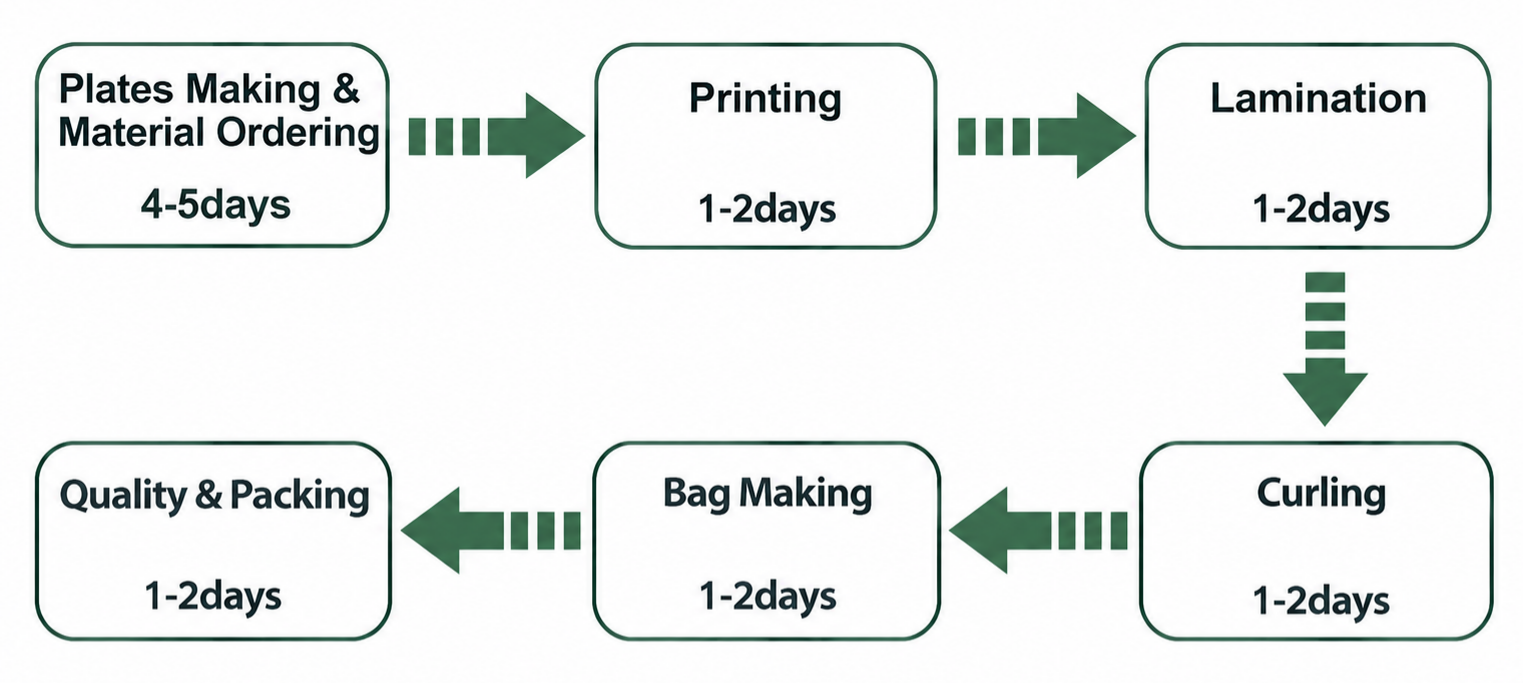
The right printing method depends on the artwork, board surface, order quantity, and finish. A detailed illustration has different production needs from a simple one-colour logo, while metallic lettering requires a separate finishing process.
Offset printing suits detailed graphics and larger production runs. Ink transfers from a plate through a rubber blanket onto the material, allowing fine logos, illustrations, and complex designs to reproduce consistently on suitable paperboard. Colour results still depend on the substrate and print specifications.
For smaller orders or changing collections, digital printing avoids conventional printing plates. Brands can produce different artwork versions without preparing a separate plate for each design, making it useful for limited editions and packaging that changes with seasonal collections.
Flexographic printing is widely used for high-volume packaging on suitable paperboard and corrugated materials. Printed mailer boxes with repeat graphics or relatively simple artwork are common applications. It suits production runs where the same design needs to be reproduced across larger quantities.
Screen printing suits designs built around bold graphics and solid areas of colour. It pushes ink through a mesh stencil onto a compatible surface and offers a different finish from processes typically used for detailed, full-surface artwork.
For a more decorative logo, hot foil stamping transfers metallic foil onto selected areas using heat and pressure. Gold or silver lettering can stand out against a restrained background without covering the entire box. Embossing raises selected areas of the material, while debossing presses them inward. These finishes can be combined with printed artwork when the box material and design allow.
Complete Your Packaging in One Place
Why not customise everything with the same manufacturer, from boxes and box fillers to paper bags and custom cards? This can help reduce costs while keeping your packaging consistent across every detail.
At TUOBO Packaging, you can find everything you need for your packaging! Visit our website to explore more products, or contact us to get a quote tailored to your needs.
TUOBO’s 15th anniversary celebration is coming soon, with more special offers on the way. Place your order now to make the most of the upcoming savings!